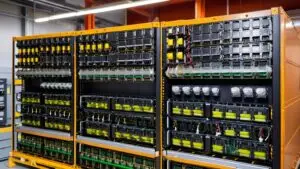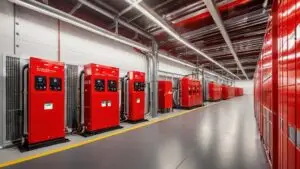
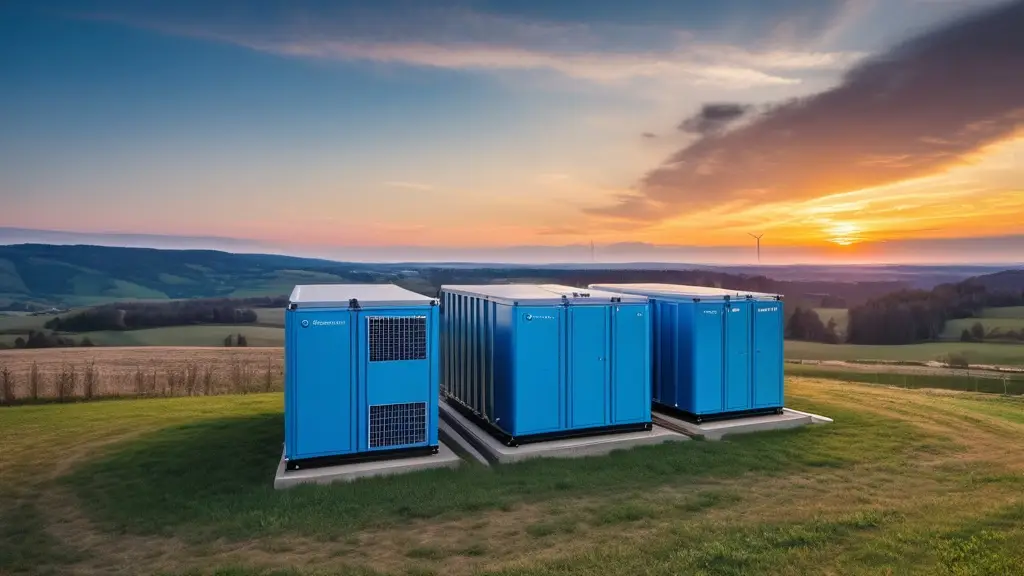
Energy Storage Systems (ESS) are pivotal in the modern energy landscape, serving as a bridge between energy generation and consumption. At their core, these systems are designed to capture energy produced at one time for use at a later time, thereby enhancing the reliability and efficiency of energy supply. The fundamental principle behind an ESS is to store excess energy generated during periods of low demand or high production, such as during sunny or windy days, and release it when demand peaks or generation falls short.
This capability is crucial for integrating renewable energy sources like solar and wind into the grid, which are inherently variable. The architecture of an ESS typically includes several key components: batteries for energy storage, inverters for converting direct current (DC) to alternating current (AC), and a battery management system (BMS) to monitor and control the health and performance of the batteries. The integration of these components allows for a versatile range of applications, from residential energy storage solutions that help homeowners manage their electricity bills to large-scale grid storage systems that stabilize the energy supply for entire regions.
As the demand for clean energy solutions grows, understanding the intricacies of ESS becomes increasingly important for both consumers and industry stakeholders.
Key Takeaways
- Energy storage systems (ESS) are essential for storing excess energy and ensuring a reliable power supply.
- Batteries play a crucial role in energy storage systems by storing and releasing energy as needed.
- Inverters are key components in energy storage systems, converting DC power from batteries to AC power for use in homes or businesses.
- The battery management system (BMS) is vital for monitoring and controlling the performance and safety of batteries in energy storage systems.
- Different types of batteries, such as lithium-ion and lead-acid, are used in energy storage systems, each with its own advantages and limitations.
The Role of Batteries in Energy Storage Systems
Batteries are the heart of any Energy Storage System, providing the necessary capacity to store electrical energy for later use. They function by converting electrical energy into chemical energy during charging and then reversing the process during discharging. This conversion is facilitated by electrochemical reactions within the battery cells, which can vary significantly depending on the type of battery technology employed.
The choice of battery technology directly impacts the efficiency, lifespan, and overall performance of the ESS. Lithium-ion batteries have emerged as the dominant technology in modern ESS due to their high energy density, long cycle life, and decreasing costs. They are particularly well-suited for applications requiring rapid charging and discharging capabilities.
However, other battery technologies, such as lead-acid, flow batteries, and sodium-sulfur batteries, also play important roles in specific applications. For instance, lead-acid batteries are often used in smaller-scale systems due to their low initial cost, while flow batteries are favored for large-scale applications due to their scalability and long discharge durations. Each type of battery brings its own set of advantages and limitations, making it essential to evaluate them based on specific use cases.
How Inverters Work in Energy Storage Systems

Inverters are critical components of Energy Storage Systems, responsible for converting the stored DC electricity from batteries into AC electricity that can be used by household appliances or fed back into the grid. This conversion process is essential because most electrical devices operate on AC power, and the grid itself is designed to distribute AC electricity. Inverters also play a vital role in managing the flow of electricity between the battery storage and the grid or load.
The operation of an inverter involves several key functions beyond mere conversion. Modern inverters are equipped with advanced features such as maximum power point tracking (MPPT), which optimizes the amount of energy extracted from solar panels or other renewable sources. Additionally, inverters can provide grid support functions, such as frequency regulation and voltage support, which help maintain grid stability.
Some inverters also incorporate smart technology that allows for remote monitoring and control, enabling users to optimize their energy usage patterns based on real-time data.
The Importance of the Battery Management System (BMS)
A Battery Management System (BMS) is an essential component of any Energy Storage System, ensuring that batteries operate safely and efficiently throughout their lifecycle. The BMS monitors various parameters such as voltage, current, temperature, and state of charge (SOC) to protect the batteries from conditions that could lead to failure or reduced performance. By continuously assessing these parameters, the BMS can prevent overcharging, deep discharging, and overheating—common issues that can significantly shorten battery life.
Moreover, a BMS plays a crucial role in balancing the individual cells within a battery pack. In multi-cell configurations, variations in cell performance can lead to imbalances that affect overall system efficiency and safety. The BMS employs balancing techniques to ensure that all cells operate within their optimal range, thereby maximizing capacity and extending lifespan.
Additionally, many modern BMS units come equipped with communication capabilities that allow them to interface with other system components, providing valuable data for system optimization and maintenance.
Types of Batteries Used in Energy Storage Systems
The selection of battery technology is a critical decision when designing an Energy Storage System, as different types of batteries offer distinct advantages and disadvantages based on application requirements. Lithium-ion batteries are widely recognized for their high energy density and efficiency; they dominate applications ranging from electric vehicles to residential solar storage systems. Their ability to deliver high power output makes them ideal for applications requiring quick bursts of energy.
Lead-acid batteries have been a staple in energy storage for decades due to their low cost and established manufacturing processes. While they have a lower energy density compared to lithium-ion batteries and a shorter lifespan, they remain popular for off-grid applications and backup power systems where budget constraints are a primary concern. Flow batteries represent another innovative option; they utilize liquid electrolytes stored in external tanks, allowing for scalable energy storage solutions that can be tailored to specific needs.
Their long cycle life and ability to discharge over extended periods make them suitable for large-scale applications such as grid stabilization.
Choosing the Right Inverter for Your Energy Storage System

Selecting the appropriate inverter is crucial for optimizing the performance of an Energy Storage System. Several factors must be considered when making this decision, including power rating, efficiency, compatibility with battery technology, and additional features such as grid-tie capabilities or off-grid functionality. The power rating should match or exceed the maximum load requirements of the system to ensure reliable operation during peak demand periods.
Efficiency is another critical consideration; higher efficiency ratings translate into less energy loss during conversion from DC to AC power. Inverters with advanced features like MPPT can further enhance overall system performance by maximizing energy harvest from renewable sources. Compatibility with specific battery chemistries is also essential; some inverters are designed specifically for lithium-ion batteries while others may be optimized for lead-acid or flow batteries.
Understanding these nuances can help users select an inverter that not only meets their current needs but also allows for future scalability as energy demands evolve.
Ensuring Safety and Efficiency with a Battery Management System (BMS)
The safety and efficiency of an Energy Storage System hinge significantly on the effectiveness of its Battery Management System (BMS). A well-designed BMS not only safeguards against potential hazards such as thermal runaway—a condition where excessive heat leads to battery failure—but also enhances overall system performance through intelligent monitoring and control mechanisms. By continuously tracking critical parameters like temperature and voltage across individual cells, a BMS can detect anomalies early on and take corrective actions to prevent damage.
In addition to safety features, a BMS contributes to operational efficiency by optimizing charging cycles based on real-time data analysis. For instance, it can adjust charging rates depending on ambient temperature or state of charge to prolong battery life while ensuring that energy is available when needed most. Furthermore, many modern BMS units incorporate communication protocols that allow them to share data with other system components or external monitoring platforms.
This connectivity enables users to gain insights into system performance trends over time, facilitating proactive maintenance strategies that can further enhance safety and efficiency.
Exploring Different Battery Chemistries for Energy Storage Systems
The landscape of battery chemistries available for Energy Storage Systems is diverse, each offering unique characteristics suited for specific applications. Lithium-ion batteries have gained prominence due to their high energy density and efficiency; however, they are not without limitations such as cost and environmental concerns related to resource extraction and recycling processes. As a result, alternative chemistries are being explored to address these challenges.
Sodium-ion batteries represent one promising alternative; they utilize abundant sodium resources instead of lithium, potentially lowering costs while maintaining competitive performance metrics. Flow batteries also offer unique advantages; their modular design allows for easy scaling based on energy needs while providing long-duration discharge capabilities ideal for grid applications. Other chemistries like nickel-cadmium (NiCd) and nickel-metal hydride (NiMH) continue to find niche applications despite being overshadowed by lithium-ion technologies due to their lower energy densities and higher self-discharge rates.
The Function of Inverters in Energy Storage Systems
Inverters serve multiple functions within Energy Storage Systems beyond merely converting DC electricity from batteries into usable AC power. They act as intelligent controllers that manage the flow of electricity between various components of the system—batteries, renewable generation sources like solar panels, and loads or the grid itself. This management is crucial for optimizing system performance and ensuring that energy is delivered efficiently when needed.
In addition to conversion functions, modern inverters often include features such as grid support capabilities that help stabilize voltage levels and frequency on the grid during fluctuations in demand or supply. They can also facilitate demand response strategies by adjusting output based on real-time pricing signals or grid conditions. Furthermore, many inverters now come equipped with advanced monitoring systems that provide users with insights into energy production and consumption patterns, enabling more informed decision-making regarding energy usage.
Maximizing the Lifespan of Batteries in an Energy Storage System
Maximizing battery lifespan is a critical consideration when designing an Energy Storage System; it directly impacts both economic viability and environmental sustainability. Several strategies can be employed to extend battery life significantly. One key approach involves implementing optimal charging practices that avoid extreme states of charge—both overcharging and deep discharging—which can lead to accelerated degradation over time.
Temperature management is another vital factor influencing battery longevity; excessive heat can accelerate chemical reactions within batteries that lead to wear and tear. Incorporating thermal management systems that maintain optimal operating temperatures can mitigate this risk significantly. Additionally, regular monitoring through a robust Battery Management System (BMS) allows users to track performance metrics over time and identify potential issues before they escalate into significant problems.
Integrating ESS Components for a Seamless Energy Storage Solution
The successful integration of various components within an Energy Storage System is essential for creating a seamless solution that meets user needs effectively. This integration involves ensuring compatibility between batteries, inverters, and management systems while optimizing their collective performance through intelligent control strategies. A well-integrated ESS not only enhances operational efficiency but also simplifies user experience by providing intuitive interfaces for monitoring and control.
Collaboration between manufacturers of different components can facilitate smoother integration processes; standardized communication protocols enable seamless data exchange between devices from different vendors. Furthermore, advancements in smart technology allow users to leverage data analytics tools that provide insights into system performance trends over time—enabling proactive maintenance strategies that enhance reliability while minimizing downtime. As the demand for efficient energy solutions continues to grow globally, effective integration will play a pivotal role in shaping the future landscape of Energy Storage Systems.
FAQs
What are the key components in an energy storage system?
An energy storage system typically consists of three main components: the energy storage device (such as a battery), the power conversion system, and the energy management system.
What is the role of the energy storage device in an energy storage system?
The energy storage device, often a battery, is responsible for storing electrical energy for later use. It allows for the storage of excess energy generated during periods of low demand, which can then be used during peak demand periods.
What is the power conversion system in an energy storage system used for?
The power conversion system is responsible for converting the electrical energy stored in the energy storage device into a form that can be used by the end user. It also ensures that the energy is delivered at the appropriate voltage and frequency.
What is the function of the energy management system in an energy storage system?
The energy management system is responsible for monitoring and controlling the flow of energy within the storage system. It helps optimize the performance of the system by managing charging and discharging cycles, as well as ensuring the overall efficiency of the system.